
Bunion Surgery for Lasting Correction
Surgical solutions that address the root cause of your bunion, restoring alignment and getting you back on your feet.
What You Need To Know
Understanding bunions and when surgery becomes the right option for you.
Understanding Bunions and Surgical Care
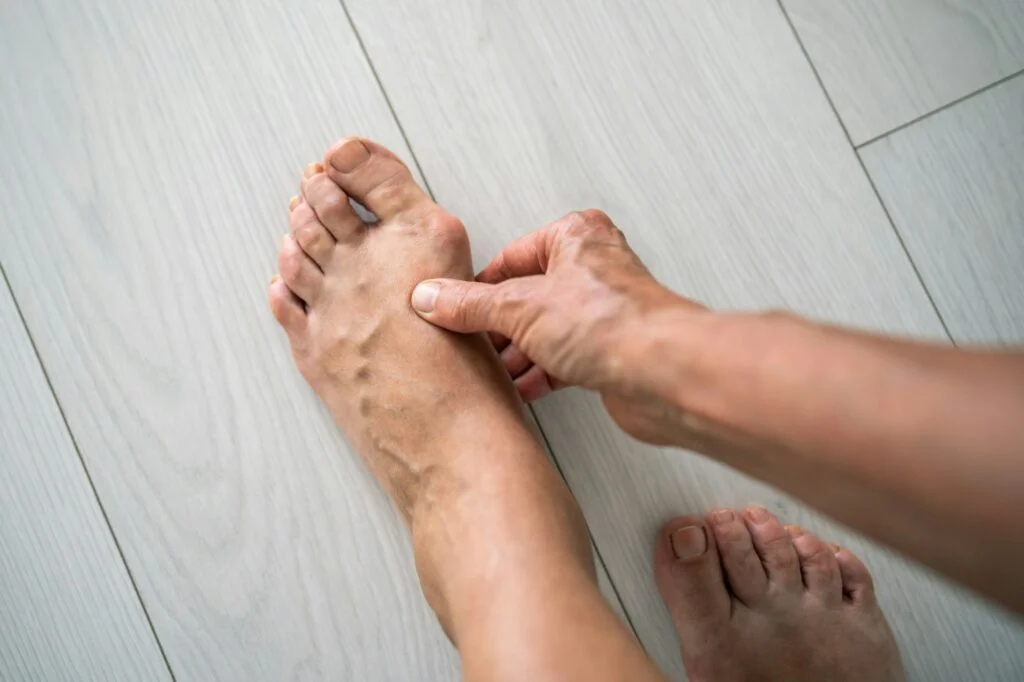
For most, a bunion is defined as a prominence or ‘bump’ near the big toe joint. When seen with the naked eye, however, we don’t get the whole story. The bump that develops over time is the result of the slow drifting of a bone in the foot that causes a dislocation of the big toe joint. The bump is, in fact, normal bone (not extra) in most cases which has moved out of position.
The cause of a bunion is biomechanical in nature. Instability of a joint along the arch of the foot often results in the slow drifting of one of the bones comprising the big toe joint. Yes, you can thank someone in your family tree for passing down the foot structure that results in a bunion. Despite what you may read in your google searches, bunions are not caused by shoes, though narrow or pointed shoes can aggravate the problem.
Not all bunions are physically painful. Some cause no problems whatsoever, while others cause significant discomfort or embarrassment. There are also circumstances where foot pain outside the big toe joint, such as hammertoes or neuromas, is in fact due to a bunion. The instability taxes joints and tendons in the forefoot differently.
Bunions progress as we get older and never regress by themselves. Advertised splints, sandals, and straps do not correct the deformity. If you have a bunion (painful or not), a consultation with a podiatrist will give you a wealth of information and recommendations so you can move forward with confidence in the plan that is best for you.
Surgical Options and Recovery
Having a bunion does not by itself mean you need surgery. Bunion surgery is elective, meaning it is your choice whether surgery is the right solution for you. A bunion should be bothersome on a regular basis to a point that limits your activities and shoes to be worth the risks and recovery involved. If you want to keep your bunion, we can treat it conservatively with appropriate shoes, custom orthotics, padding, and injection therapy to maximize your comfort.
3D bunion correction is a surgical solution that repositions the bone to restore more normal anatomical function and motion in the great toe joint. The previously unstable joint is then secured with plates, screws, or pins to minimize recurrence. Lapiplasty and Lapifuse are two systems used to perform this correction, addressing the biomechanical cause rather than just removing the bump.
OSSIOfiber is an all-natural, metal-free option built with natural mineral fibers and natural polymer. The implant provides stability during healing and is then replaced by your own bone over 18 to 24 months, leaving no permanent hardware behind. This can help patients avoid complications sometimes associated with metal implants.
Recovery varies based on the procedure, your age and weight, and the severity of the bunion. Many patients begin weight bearing within a week using a protective shoe or boot. Physical therapy is essential to reduce stiffness and help you return to your routine. We will review all options with you to determine the best course of treatment.
Find Bunion Surgery Care Near You Today
Find a 1Foot 2Foot location offering bunion evaluation and surgical care close to home.
Ready to stop letting your bunion decide what shoes you can wear?
Let’s talk through your options and find the right plan for your feet.