
Charcot Foot Care for Diabetic Patients
Early diagnosis and treatment of Charcot foot can prevent deformity, ulceration, and the need for limb salvage.

What You Need To Know
Learn how Charcot foot develops, what to watch for, and why early care matters.
Understanding Charcot Foot
Charcot foot is a rare but serious complication that impacts the bones, joints, and soft tissue in your foot and ankle. It is typically the result of nerve damage and can cause the foot to be deformed. This deformity could lead to ulceration, infection, and amputation. Oftentimes, Charcot foot isn’t associated with any pain, so it’s imperative that you are on top of your foot health.
Charcot foot is the result of bone or joint damage. It can begin with peripheral neuropathy, a disease of the nerves. As the nerves are impacted, the patient may not sense sensations in their foot. Repeated minor fractures that aren’t felt or don’t heal correctly can also worsen and lead to Charcot foot. Diabetics are more likely to suffer from Charcot foot due to diabetes-related neuropathy.
Symptoms include a red appearance of the foot or ankle, swelling, increased warmth compared to the other foot, the foot feeling warm to the touch, and soreness. Check your feet daily for changes, keep regular appointments with your board-certified podiatrist, and always wear shoes and socks, even when you are indoors.
Early diagnosis is crucial to prevent joints from collapsing and deforming the foot. Your board-certified podiatrist will examine your foot and ankle, ask about your symptoms, and may take the temperature of your feet. X-rays and other tests may be used to diagnose your condition. Contact your board-certified podiatrist if you have any symptoms of Charcot foot!
Treatment, Prevention, and FAQs
There are both non-surgical and surgical treatment options, depending on the severity of Charcot foot. Decreasing pressure to your feet is one of the most important ways to heal Charcot foot, as this protects the weakened bones from further damage. Your doctor may have you wear a cast, boot, or brace, and you may need a knee scooter or crutches. Custom orthotics and bracing can help the bones heal and prevent recurrence.
If Charcot foot has caused a severe deformity or if an infection has spread, surgery may be necessary. A board-certified surgeon will repair the damage and stabilize your foot. The goal of surgery is to provide a stable foot that will not develop further ulcerations.
If Charcot foot isn’t caught early, the joints or arch can collapse, causing the foot to become deformed. It may also permanently affect the patient’s ability to use their foot and can lead to infection. In severe cases, failure to get treatment can result in the loss of a toe, foot, or leg.
Helpful prevention tips include managing your blood sugar levels, wearing shoes and socks even when you’re indoors, getting fit for custom orthotics, stopping any activity causing foot or ankle pain, and maintaining blood flow by wiggling your toes and elevating your feet. If you notice any changes in your feet or loss of sensation, call our office to schedule an evaluation!
Charcot Foot Care Near You
Find a 1Foot 2Foot location near you for expert diabetic foot and Charcot foot care.



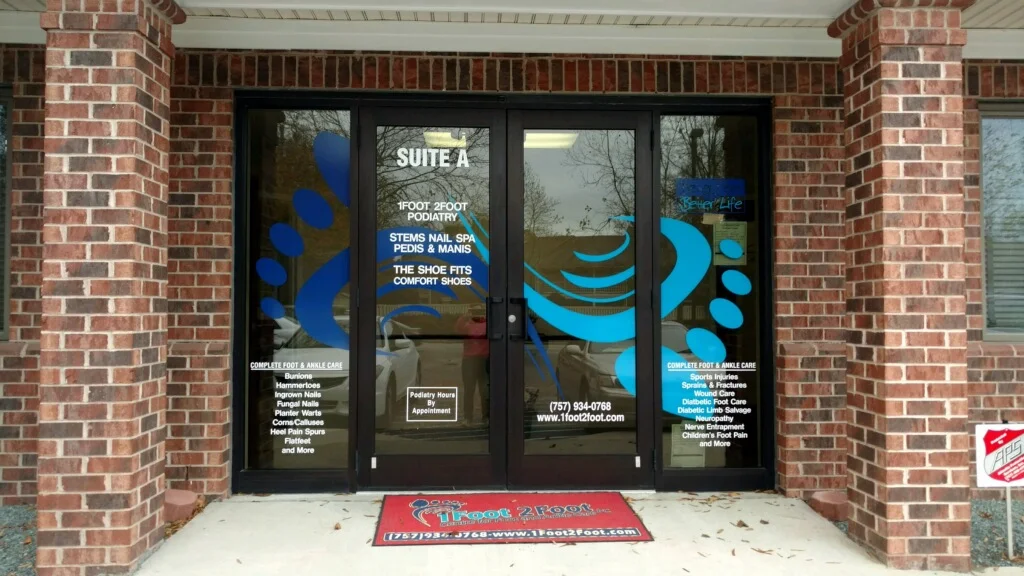

Don’t wait to have Charcot foot symptoms checked, early care makes all the difference.
We’re here to protect your feet and keep you moving. Let’s get you scheduled.